
GLOBAL MACRO & MULTI-ASSET WEEKLY OUTLOOK
$SPY $QQQ $NVDA $MSFT $GLD $BTC $TLT
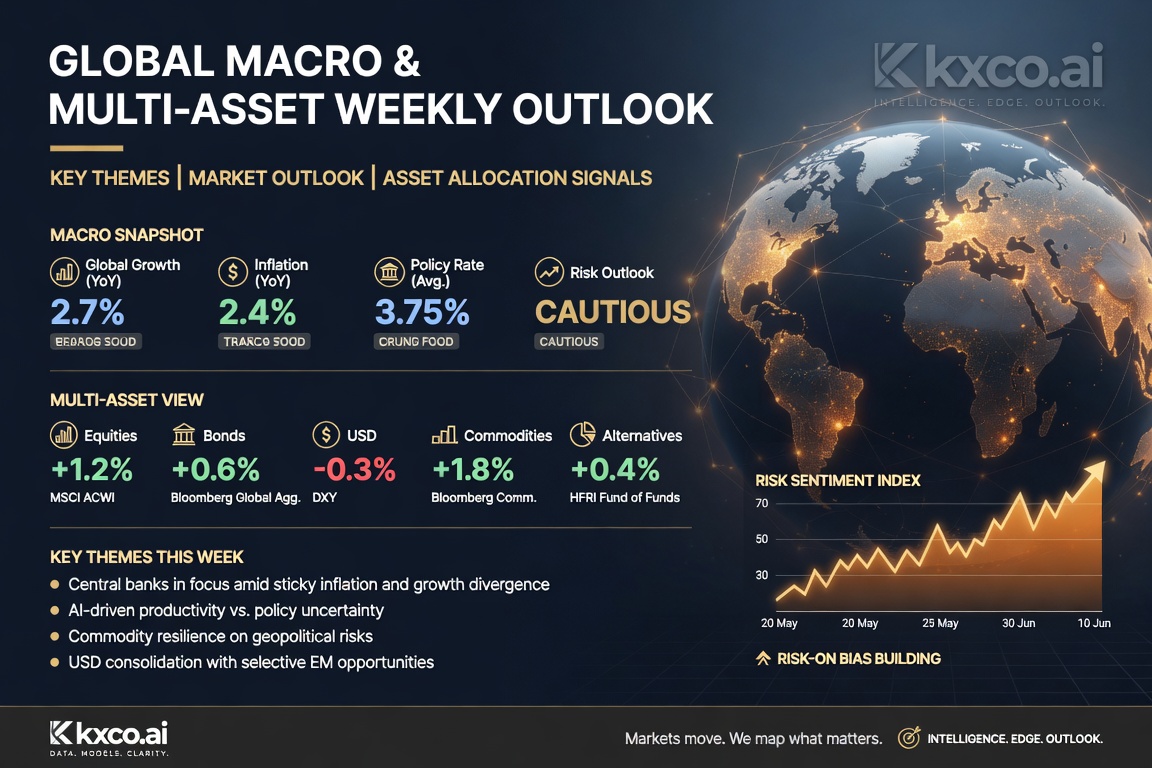
As we look across the global macroeconomic landscape this week, my overarching message to investors and traders is unequivocal:
Be cautious. There are more dips to come.
We are currently trapped in a highly deceptive market environment. On the surface, major U.S. equity indices are hovering near all-time highs, creating a dangerous sense of FOMO (Fear Of Missing Out) among retail traders. However, beneath this thin veneer of strength, the fundamental and technical undercurrents are deteriorating. Market breadth is collapsing, liquidity is tightening, and the "soft landing" narrative is being aggressively priced out by bond vigilantes.
In this environment, chasing breakouts is a fool's errand. The smart money is not buying the tops; they are preparing their capital for the inevitable corrections. My core recommendation for this week and the coming weeks is simple: Buy the dips, but be cautious. Do not deploy all your dry powder at once. The volatility that is brewing will offer generational entry points, but only for those who have the patience to wait for the pitch.
To properly time these dips, traditional lagging indicators will not suffice. We are operating in an era dominated by algorithmic momentum and AI-driven sentiment shifts that occur in milliseconds. To keep a pulse on these rapid market dynamics, I heavily rely on the real-time flow data and institutional signaling aggregated at Live Trading News (https://www.livetradingnews.com/trading). More importantly, to understand the predictive structure of these market moves, we must utilize advanced relational AI. The era of basic chart reading is over; the future belongs to ontological AI, a frontier currently being pioneered by the quantitative engines at KXCO.ai Ontology Live (https://kxco.ai/ontology-live/).
Let’s break down the exact trading strategies for each major asset class to navigate the dips ahead.
PART I: EQUITIES (STOCKS) OUTLOOK & STRATEGY
Market State: A House of Cards
The U.S. stock market is historically overbought. The S&P 500 is being propped up by a handful of mega-cap tech stocks (the "Magnificent Seven"), while the equal-weight S&P 500 and the Russell 2000 have flatlined or rolled over. This is a massive red flag. When the leaders finally succumb to profit-taking, there is no underlying breadth to support the broader market. We are seeing credit card delinquencies rising, consumer savings depleting, and corporate earnings estimates being quietly revised downward.
Trading Strategy: "Scale-In Dip Buying" (Cautious)
Do not buy the current highs. We are setting up for a 5% to 8% pullback in the NASDAQ and a potential retest of the S&P 500's 50-day moving average (around the 5,050 level).
Action Plan: Wait for panic. When the market breaks below key support levels and mainstream financial media starts panicking, begin scaling in.
Execution: Divide your intended equity allocation into three tranches.
Tranche 1: Buy the initial test of the 50-Day Moving Average.
Tranche 2: Buy if the market slices through the 50-DMA and tests the 200-Day Moving Average.
Tranche 3: Keep in reserve for a black swan event (e.g., a sudden geopolitical escalation or a severe liquidity crunch).
Sectors to Buy on the Dip: Focus on high-quality, cash-flow-rich tech companies with actual AI revenue (not just AI promises), and defensive sectors like healthcare and high-yield utilities. Avoid highly leveraged consumer discretionary stocks.
The AI Edge in Equities
Knowing exactly when a dip has reached its bottom rather than catching a falling knife requires processing millions of data points instantly. By monitoring the algorithmic order flow and institutional dark pool activity via Live Trading News (https://www.livetradingnews.com/trading), traders can spot the exact moment selling pressure abates. Furthermore, utilizing the predictive relational mapping at KXCO.ai Ontology Live (https://kxco.ai/ontology-live/) allows you to see how an obscure economic data point (like a regional manufacturing collapse) mathematically cascades into a specific sector selloff, allowing you to buy the dip before the retail crowd even realizes what happened.
PART II: FOREIGN EXCHANGE (FX) OUTLOOK & STRATEGY
Market State: Dollar Supremacy
The U.S. Dollar (DXY) has staged a vicious comeback, smashing through the 105.00 resistance level. Why? Because the rest of the world is in worse shape than the U.S. The European Central Bank is about to cut rates while inflation remains sticky; the Bank of Japan is talking tough but refusing to defend the Yen with actual rate hikes. The interest rate differential heavily favors the Dollar, meaning capital will continue to flow into USD-denominated assets, putting extreme pressure on emerging market currencies and the Euro.
Trading Strategy: "Sell the Rallies, Buy the Extreme Dips in Pairs"
In FX, the strategy must be highly asymmetric because central bank interventions can cause violent, short-squeeze spikes.
EUR/USD Strategy: This pair is fundamentally broken. Do not try to bottom-tick it. Sell the rallies. Anytime EUR/USD approaches the 1.0850 to 1.0900 resistance zone, initiate short positions with tight stops above 1.0950. Target 1.0600.
USD/JPY Strategy: The Yen is dangerously weak. The Japanese Ministry of Finance will intervene eventually. Therefore, do not short the Yen up here. Instead, wait for the inevitable intervention spike (a sudden 200-300 pip drop in USD/JPY). Buy that dip in USD/JPY, as the fundamental macro reality (rate differential) will eventually overpower government jawboning.
Risk Management: Keep FX position sizes exceptionally small. Leverage amplifies the pain of a sudden central bank surprise. Use the real-time pivot points and currency heat maps provided by Live Trading News (https://www.livetradingnews.com/trading) to manage intraday stop-losses.
AI in FX Execution
FX is the ultimate algorithmic battleground. To survive, you must understand the relational impact of cross-asset flows. For instance, if Gold drops suddenly, how does that correlate with a Yen intervention? The ontology-driven AI at KXCO.ai Ontology Live (https://kxco.ai/ontology-live/) maps these invisible relationships, allowing forex traders to anticipate cross-pair contagion before it triggers margin calls.
PART III: PRECIOUS METALS (GOLD) OUTLOOK & STRATEGY
Market State: The Parabolic Disconnect
Gold is trading above $2,350, defying gravity. Traditionally, Gold moves inversely to real U.S. interest rates and the Dollar. Right now, both the Dollar and rates are rising, yet Gold is soaring. This means the market is pricing in something much darker than standard inflation: systemic de-dollarization. Central banks in China, India, and Russia are hoarding physical Gold at a record pace, bypassing the Western paper-futures market entirely.
However, parabolic moves never last forever. Gold is massively overbought on the weekly RSI. A sharp, violent correction is not just possible; it is mathematically probable to shake out the late-comers.
Trading Strategy: "Wait for the Washout, Then Back Up the Truck"
My recommendation for Gold is extreme caution here. Do not buy Gold at current levels.
Action Plan: We need a healthy 5% to 8% pullback. I am looking for Gold to retrace back to the $2,180 - $2,200 support zone. This will represent a retest of the previous all-time high breakout level, which is textbook technical behavior.
Execution: When Gold breaks below $2,250, expect panic selling from momentum traders. That is your cue. Buy the dip aggressively in that $2,180-$2,200 range.
Physical vs. Paper: If you are buying this dip for long-term wealth preservation, allocate a portion to physical Gold. If trading, use the GLD or IAU ETFs with defined stop-losses just below the $2,150 level.
Data-Driven Precious Metals Trading
Tracking the opaque physical Gold market (Shanghai premiums, London vault outflows) requires deep data integration. Standard news feeds miss these hidden drivers. By cross-referencing the structural supply chain data parsed by KXCO.ai Ontology Live (https://kxco.ai/ontology-live/) with the intraday spot-price triggers at Live Trading News (https://www.livetradingnews.com/trading), traders can distinguish between a fake paper-driven dip and a legitimate physical market flush, ensuring they buy the right dip.
PART IV: DIGITAL ASSETS (BITCOIN) OUTLOOK & STRATEGY
Market State: Post-Halving Indigestion
Bitcoin is stuck in a post-halving limbo, ranging between $60,000 and $72,000. The institutional demand from the Spot ETFs is astonishing, but it is currently being entirely absorbed by massive overhanging supply. The German government is moving billions in seized Bitcoin to exchanges to sell, and the Mt. Gox bankruptcy estate is preparing to distribute $9 billion in BTC to creditors.
This creates a ceiling of resistance. Bitcoin wants to go up, but the gravity of these imminent sell-offs is keeping it suppressed. More dips are absolutely guaranteed in the short term as these distributions hit the order books.
Trading Strategy: "DCA the Fear, Ignore the FOMO"
Bitcoin is the ultimate "buy the dip" asset, but timing matters for risk management.
Action Plan: Do not chase Bitcoin above $68,000. We are going to see a sweep of liquidity below $60,000.
Execution: Implement a strict Dollar-Cost Averaging (DCA) strategy into weakness.
Place limit buy orders at $62,000 (Mental support).
Place heavier limit buy orders in the "Buy Zone" between $55,000 and $58,000. This area aligns with the 200-day moving average and unfilled ETF gap windows.
Altcoins Strategy: Be exceptionally cautious with altcoins. In a Bitcoin dip caused by ETF outflows, altcoins will bleed violently. Keep your portfolio heavily weighted in BTC or stablecoins until the Mt. Gox overhang is fully priced in.
AI and Crypto Alpha
The crypto market moves 24/7 and is highly sensitive to social sentiment and on-chain whale movements. Human traders need to sleep; AI does not. Utilizing the live sentiment and flow dashboards at Live Trading News (https://www.livetradingnews.com/trading) is step one. Step two is leveraging the predictive ontological mapping at KXCO.ai Ontology Live (https://kxco.ai/ontology-live/) to analyze on-chain wallet cluster movements, predicting large-scale liquidations before they hit the exchange order books, allowing you to front-run the dips.
PART V: THE NEW PARADIGM: WHY AI IS YOUR ONLY EDGE
As I have outlined in the strategies above, the overarching theme is caution and waiting for dips. But identifying a healthy dip versus the start of a systemic crash is the hardest skill in finance.
The financial markets have become too complex, too interconnected, and too fast for the human brain to process unassisted. When a geopolitical event occurs in the Middle East, a central bank makes an unexpected comment, and a whale moves $500 million in Bitcoin simultaneously, a human trader cannot instantly calculate the cross-asset impact.
This is why I have integrated AI deeply into my macro analysis. We have moved past simple "sentiment analysis" (which just reads if a headline is good or bad). We are now in the era of Ontological AI.
An ontology is a map of how things relate. The platform KXCO.ai Ontology Live (https://kxco.ai/ontology-live/) represents the absolute cutting edge of this. Instead of just reading that the Fed raised rates, an ontological AI understands the entire web of relationships: how that rate hike affects the DXY, which in turn compresses Gold, which in turn shifts capital into emerging market bonds, which in turn impacts crypto liquidity.
By using KXCO.ai Ontology Live (https://kxco.ai/ontology-live/), we can model these second and third-order effects before they happen. It allows us to see the instability building beneath the surface of the stock market, confirming my thesis that more dips are coming. It takes the guesswork out of "buying the dip," turning it from a gamble into a calculated, data-driven execution.
CONCLUSION: PATIENCE IS THE ULTIMATE ALPHA
We are standing at the edge of a significant macroeconomic repricing. The "everything is awesome" narrative propagated by Wall Street is cracking under the weight of reality. Inflation is sticky, rates are higher for longer, and geopolitical risks are multiplying.
There will be more dips. Expect them. Welcome them.
If you chase this market here, you will be the liquidity that institutions use to exit their positions. Be cautious. Protect your capital. Sit in cash, sit in stablecoins, or sit in short-term Treasuries. Let the market break. Let the retail traders panic.
When the S&P 500 tests its 50-DMA, when Gold retraces to $2,200, and when Bitcoin sweeps the $55,000 level—that is when you deploy the capital you have patiently protected.
Stay disciplined, rely on the real-time flows at Live Trading News (https://www.livetradingnews.com/trading) to time your entries, and use the relational power of KXCO.ai Ontology Live (https://kxco.ai/ontology-live/) to ensure you are buying a genuine dip, not a falling knife.
Buy the dips. Be cautious. The best trades of the year are still ahead of us.
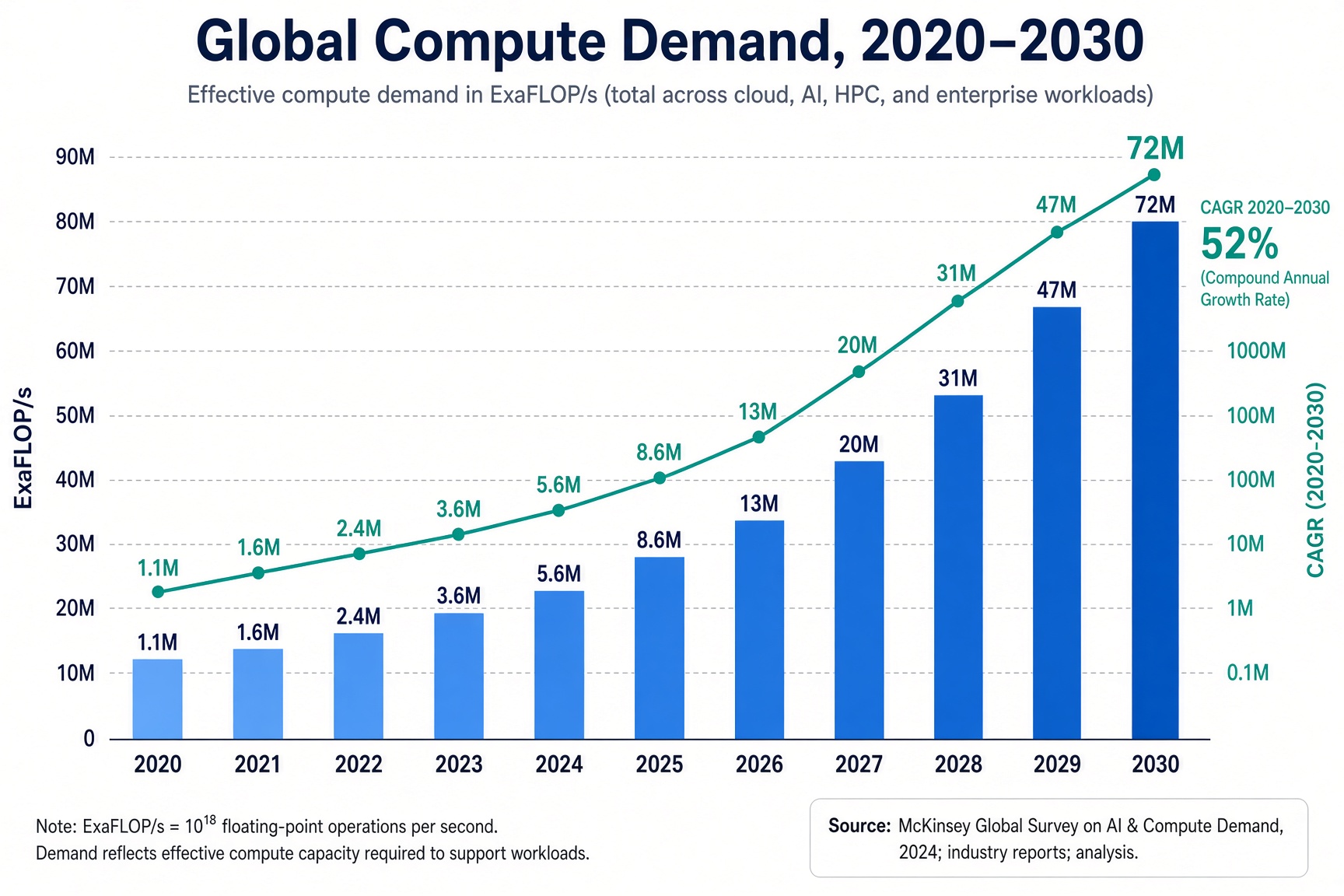
The 2030 Compute Landscape: GPUs, Power and the Architecture of Intelligence
The constraint on AI is no longer ideas or data but compute and the power to run it. Frontier training compute has grown about five times a year since 2020, and the leading AI supercomputer of June 2030 is on course for about 2 million chips and 9 gigawatts. Shayne Heffernan sets out the 2030 arithmetic, the power problem, who has already contracted the gigawatts, and how GPUs, custom ASICs, wafer-scale engines and quantum machines divide the work.

How Can You Trust AI When You Cannot Trust Humans?
Can you trust AI? Can you trust humans? More often than we like to admit, the answer is no. AI inherits its failures from the human records it is trained on. Sheikh Mohammed bin Rashid wrote this month that the currency the UAE is betting on is trust. This piece sets out what a trust layer has to do, shows the method on three public knowledge graphs, and lays out the post-quantum work KXCO has published so that an institution can check the claim rather than take it.
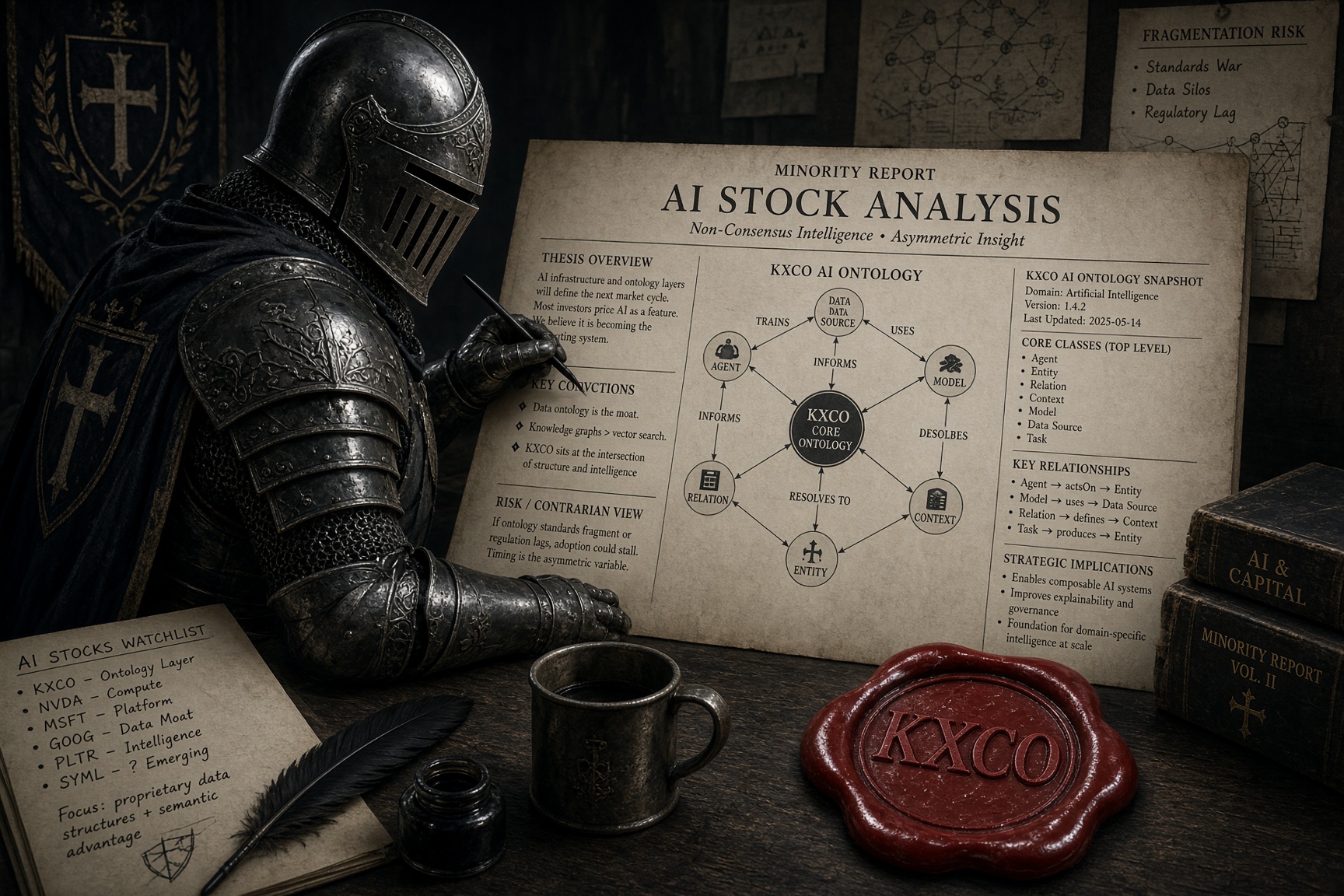
KXCO AI Ontology at 3 Months: What It Called and What Comes Next
On 19 July 2026 the Round Table's AI room published its first Analyst Outlook. To the 16 October 2026 close its 13 names rose 2.6% on an equal weight against 2.1% for QQQ, per StockAnalysis closes, and the six it opened with 35% or more of upside rose 8.6%. This piece lists the six names up more than 5%, the ten names I rate as opportunities now, the month's results in AI and quantum computing, and the official data showing that four in five firms have not yet started using AI.

SpaceX: The Road to 10 Gigawatts
SpaceX did not add an AI business. A company whose processes run on compute built its own computing plant, then built the power to run it. The 10-Q reports 1.4 gigawatts of nameplate compute at 30 June 2026, four leases worth about $41 billion a year and $100 billion of cash. The target is closer to 10 gigawatts than 5 by the end of 2027. This piece sets out the build sequence, the four layers of power in Memphis, and why Terafab is the act after 2027, not the road to it.
Every story, signed and delivered.
Subscribe to the kxco channel and get the headline, the AI-written key takeaways, and the chain-anchor link the moment we publish. Audio versions and per-ticker subscriptions arrive in the next iteration.